Trigonometric Functions
⎩⎨⎧sinθ=hypotenuseoppositecosθ=hypotenuseadjacenttanθ=cosθsinθ
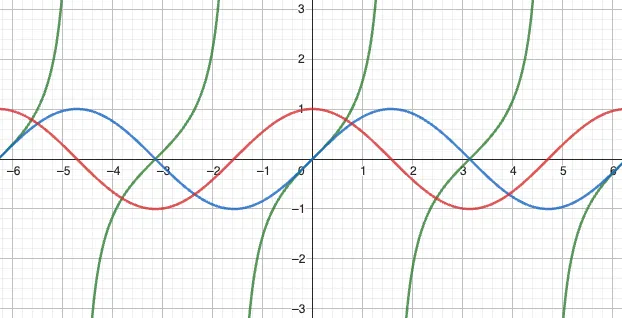
Basic Properties
Sine Function sin(x)
y=sinx
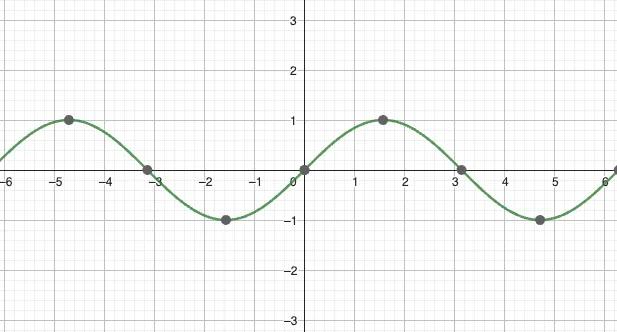
- Period: 2π
- Symmetry: Odd function
- Extremum: (2π+2kπ,1)
- Zeros: kπ (k∈Z)
Cosine Function cos(x)
y=cosx
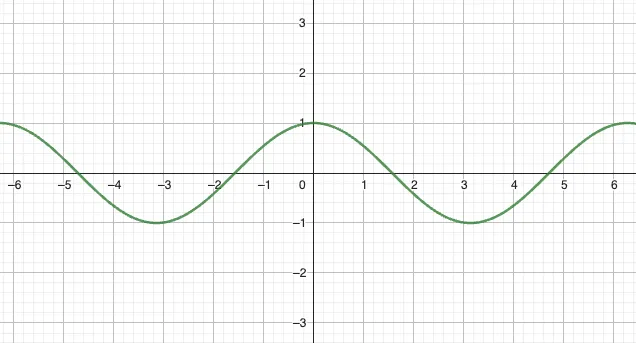
- Period: 2π
- Symmetry: Even function
- Extremum: (2kπ,1)
- Zeros: 2π+kπ
Tangent Function tan(x)
y=tanx=cosxsinx
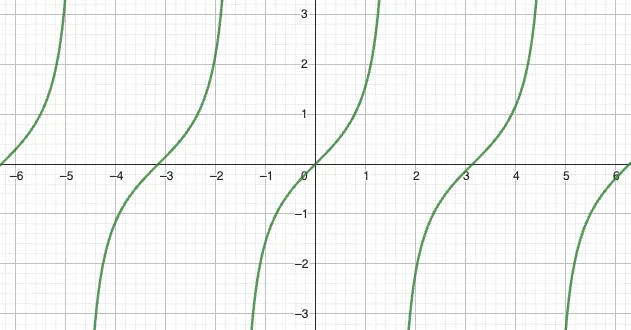
- Period: π
- Asymptotes: x=2π+kπ
- Range: R
- Special points: Passes through origin, symmetric about the center of each period
Core Properties
Derivatives and Integrals
| Function | Derivative | Integral |
|---|
| sinx | cosx | −cosx+C |
| cosx | −sinx | sinx+C |
| tanx | sec2x | $-\ln |
Important Identities
Pythagorean Identity:
sin2x+cos2x=1
Sum and Difference Formulas:
sin(a±b)=sinacosb±cosasinb
cos(a±b)=cosacosb∓sinasinb
Comparison of Functions
| Property | Sine Function | Cosine Function | Tangent Function |
|---|
| Initial value | 0 | 1 | 0 |
| Extremum | Odd multiples of π/2 | Even multiples of π | None |
| Periodicity | 2π | 2π | π |
| Asymptotes | None | None | Present |
| 30∘ | 45∘ | 60∘ |
|---|
| sin | 21 | 22 | 23 |
| cos | 23 | 22 | 21 |
| tan | 33 | 1 | 3 |
Summary
- Split the angle: Express the target angle as 2kπ±α
- Determine parity: Check if k is odd or even to decide whether to change the function name
- Determine quadrant: Identify the quadrant of 2kπ±α and determine the sign of the new function
- Combine results: Combine the sign and function name to obtain the final expression
Core Principle Analysis
Odd changes, even remains: Transformation of function names
When the angle takes the form 2kπ±α (k∈Z):
- Odd changes: If k is odd, the trigonometric function name changes to its cofunction (sine↔cosine, tangent↔cotangent)
- Even remains: If k is even, the function name remains unchanged
Example analysis:
- sin(2π+α): k=1 (odd), sin changes to cos → cosα
- cos(π+α): k=2 (even), name unchanged → cosα
- tan(23π−α): k=3 (odd), tan changes to cot → cotα
Sign depends on quadrant: Determining the sign of the function value
Assuming α is an acute angle, treat 2kπ±α as a whole angle, and determine the sign of the result based on its quadrant:
Quadrant sign mnemonic:
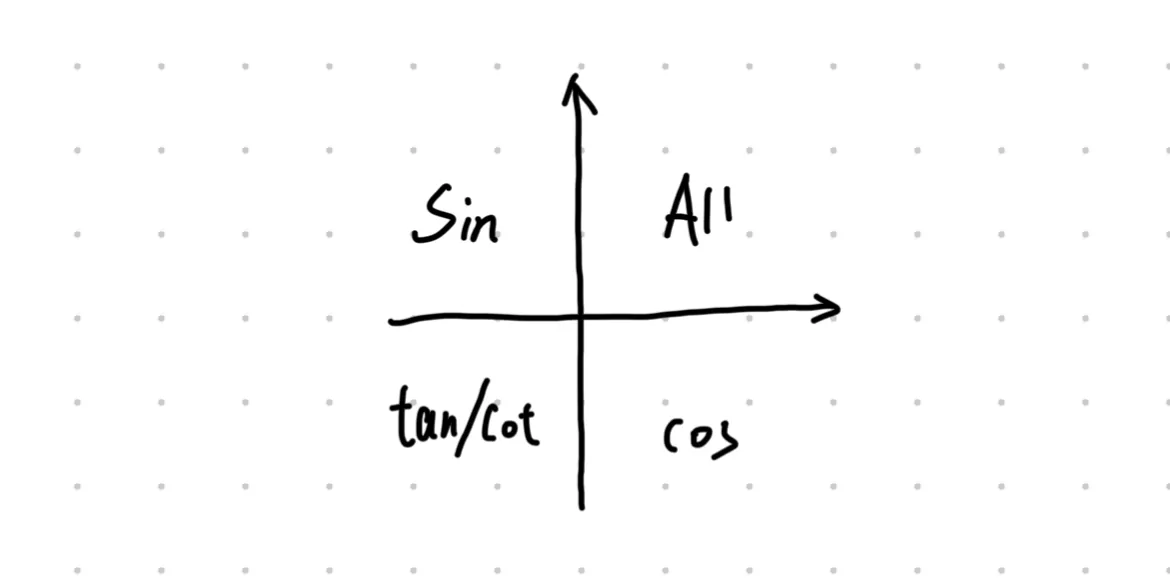
All positive in first quadrant, sine in second, tangent and cotangent in third, cosine in fourth
Steps:
- Determine the quadrant of 2kπ±α
- Determine the sign of the new function based on the quadrant
- Assign the sign to the simplified result
Example analysis:
Comprehensive Application Examples
Example 1: Simplify sin(25π−α)
- Split angle: 25π=2π+2π → k=5 (odd)
- Function name changes: sin → cos
- Quadrant determination: 25π−α is in the first quadrant, cosine is positive
- Result: cosα
Derivation:
sin(25π−α)=sin(2π+2π−α)=cosα
Example 2: Compute tan(27π+α)
- Split angle: 27π=3π+2π → k=7 (odd)
- Function name changes: tan → cot
- Quadrant determination: 27π+α is in the fourth quadrant, cotangent is negative
- Result: −cotα
Derivation:
tan(27π+α)=tan(3π+2π+α)=−cotα
Special Cases
Angles beyond 2π:
- Reduce the angle modulo 2π before determining. For example, 29π−α simplifies to 2π−α+4π, so k=9 (odd)
Negative angles:
- Use parity to convert. For example, sin(−α)=−sinα (odd function property)
Inverse Trigonometric Functions
⎩⎨⎧θ=arcsin(hypotenuseopposite)θ=arccos(hypotenuseadjacent)θ=arctan(adjacentopposite)
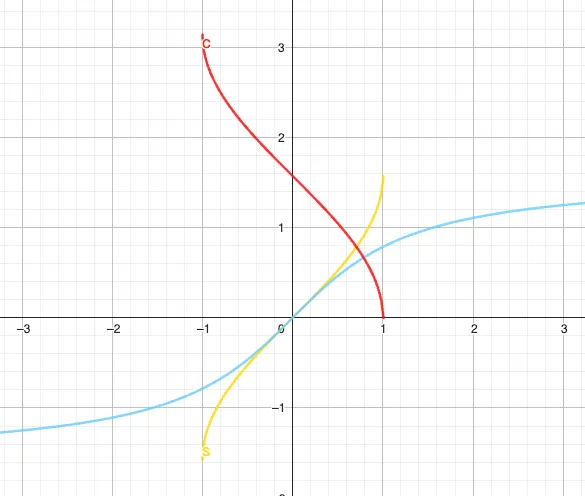
| Function | Domain | Range | Monotonicity |
|---|
| arcsinx | [−1,1] | [2−π,2π] | Strictly increasing |
| arccosx | [−1,1] | [0,π] | Strictly decreasing |
| arctanx | R | (2−π,2π) | Strictly increasing |
Basic Properties
Arcsine Function arcsin(x)
y=arcsinx
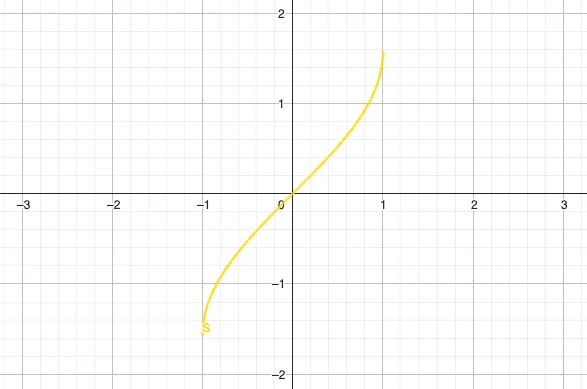
- Domain: x∈[−1,1]
- Range: [−2π,2π]
- Derivative:
dxdy=1−x21(−1<x<1)
- Monotonicity: Strictly increasing
- Special values:
- arcsin(0)=0
- arcsin(21)=6π
Arccosine Function arccos(x)
y=arccosx
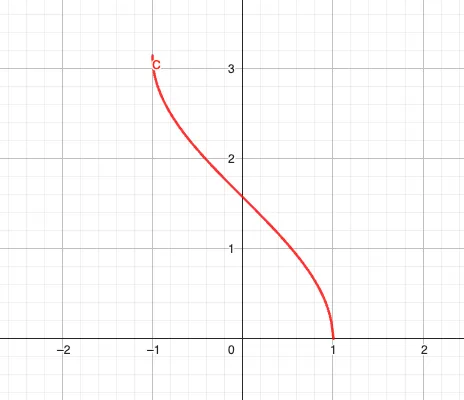
- Domain: x∈[−1,1]
- Range: [0,π]
- Derivative:
dxdy=−1−x21(−1<x<1)
- Monotonicity: Strictly decreasing
- Identity:
arccosx+arcsinx=2π
Arctangent Function arctan(x)
y=arctanx
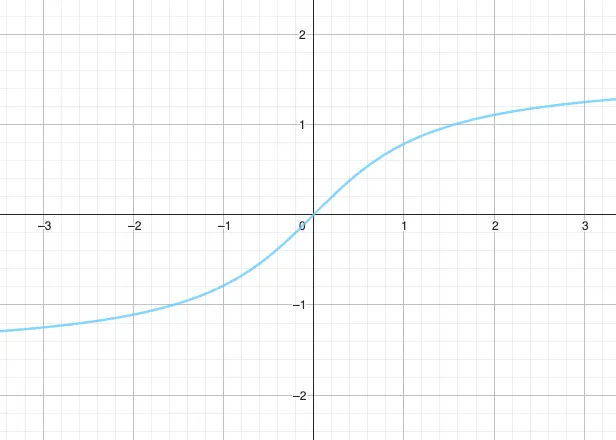
- Domain: R
- Range: (−2π,2π)
- Derivative:
dxdy=1+x21
- Asymptotes: y=±2π
- Symmetry:
arctan(−x)=−arctanx
Typical applications:
As x→∞, arctanx→2π
Integration formula:
∫x2+a21dx=a1arctan(ax)+C(a>0)
Effects of Parameters on Graphs
Taking sin(x) as an example:
Basic Parameters
Amplitude Modulation:
y=Asinx⇒Peak height∣A∣
Frequency Change:
y=sinωx⇒PeriodT=ω2π
Phase Shift:
y=sin(x+ϕ)⇒Graph shifts left by ϕ
Composite Waveform Example:
y=2sin(3x−π/4)Properties: amplitude 2, frequency 3, right shift 12π
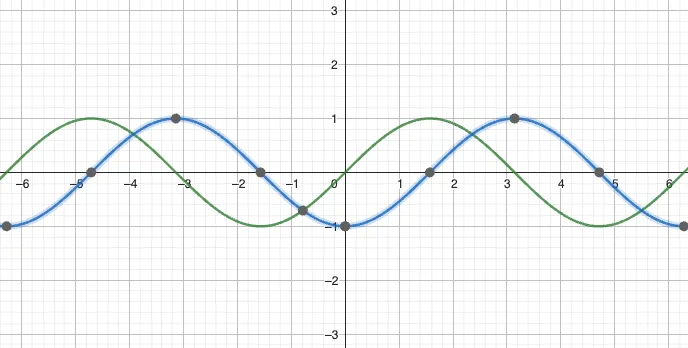
Horizontal Translation (Phase Shift)
Mathematical expression:
y=sin(x+c)
- c<0: Graph shifts right by c units
- c>0: Graph shifts left by ∣c∣ units
Example:
y=sin(x−2π)⇒Original peak (2π,1) becomes (π,1)
Vertical Translation
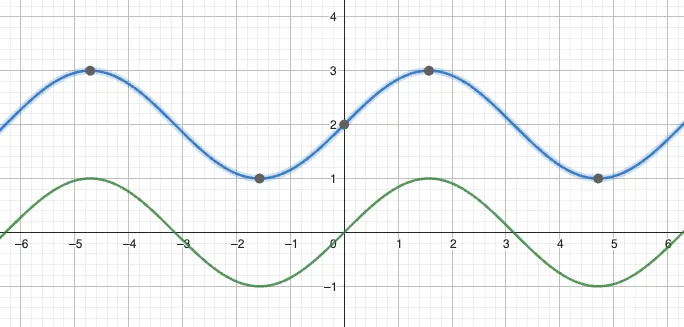
Mathematical expression:
y=sinx+d
- d>0: Graph shifts up by d units
- d<0: Graph shifts down by ∣d∣ units
Example:
y=sinx+2⇒Peak value 3, trough value 1
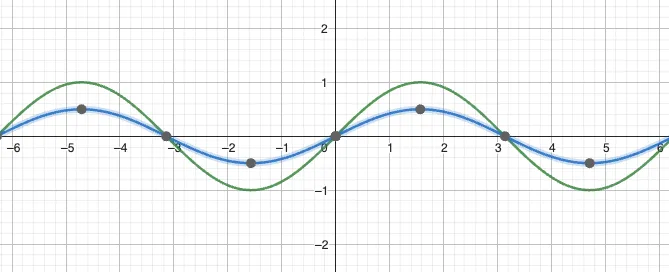
Amplitude Modulation
Mathematical expression:
y=Asinx
- ∣A∣>1: Vertical stretch
- 0<∣A∣<1: Vertical compression
- A<0: Reflection over the x-axis
Example:
y=−3sinx⇒Amplitude 3, waveform inverted
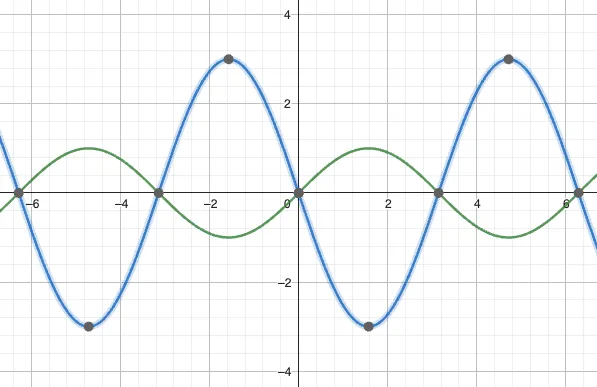
y=21sinx⇒Amplitude 21, waveform vertically compressed
Period Adjustment (Frequency Change)
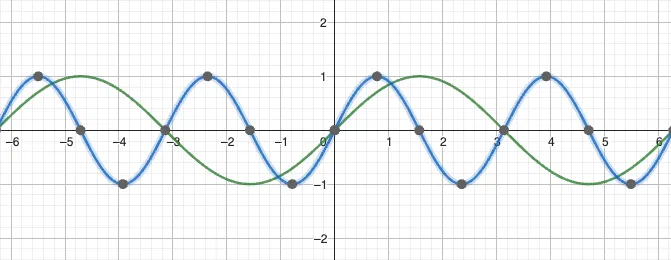
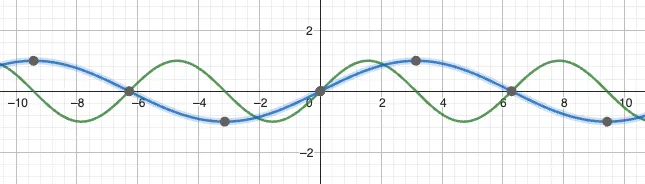
Mathematical expression:
y=sin(Bx)
- Period: T=∣B∣2π
- ∣B∣>1: Horizontal compression (shorter period)
- 0<∣B∣<1: Horizontal stretch (longer period)
Example:
y=sin(2x)⇒T=π (half of original period 2π)
y=sin(21x)⇒T=4π (twice the original period 2π)
-
Reflection over the x-axis
Expression:
y=−sinx⇒All y-coordinates are negated

Example:
sin(2π)=1⇒−sin(2π)=−1
-
Reflection over the y-axis
Expression:
y=sin(−x)⇒Equivalent to −sinx (∵sin(−x)=−sinx)
Example:
sin(−2π)=−1
Example Function:
y=3sin(2x−4π)+1

- Amplitude: 3
- Period: T=22π=π
- Phase shift: 2π/4=8π (right shift by 8π)
- Vertical translation: Upward by 1 unit
Final effect:
- Starting point changes from (0,0) to (8π,1)
- Maximum point: (8π+4π,4)
- Minimum point: (8π+43π,−2)

